Determining an appropriate mix of investments and matching those choices to your retirement goals is a keystone of successful retirement planning. If your eyes glaze over when someone starts talking about asset classes, diversification and allocation, you’re not alone. Here’s a quick guide:
What Is an Asset Class?
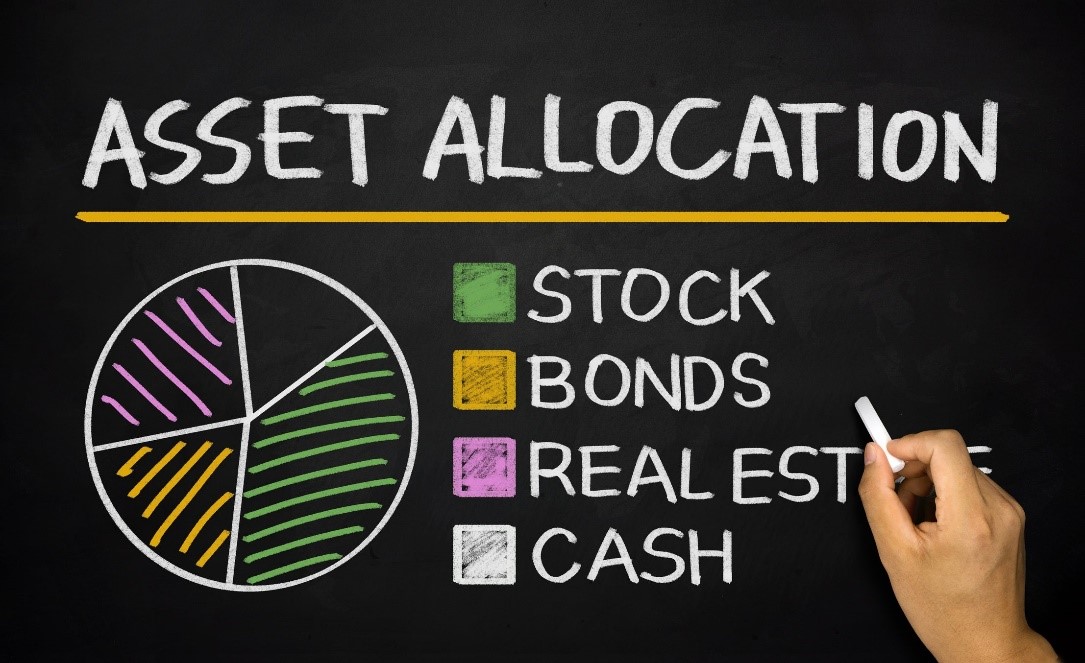
The three most common asset classes are stocks, bonds and cash. An asset class is a group of investment vehicles that usually behave in the same way — their price and profitability tend to move together in response to market conditions.
Why Do I Need to Know This?
Just as investments in one asset class move together, investments in different classes often move in different directions. Investors use these differences as one strategy to mitigate risk by dividing their investments among several asset classes — because when the value of one asset class goes down, the others may hold their ground or increase, offsetting other losses. This is called diversification.
Equities
Equities, or stocks, represent shares of ownership in the company issuing the stock. When profits go up, the stock price usually goes up too. For example, in 2006, the average price of one share of Apple was around $10. By early 2020, the success of innovative products like the iPhone drove the price as high as $327.20. However, there’s also a risk that stock prices will decline. The fall in stock values in March 2020 due to Coronavirus-related closures is a stark example: By the end of the first quarter of 2020, Apple was trading at $254.29[i]. That hurts if you bought at $327.20, but it’s still great if you bought at $10 or $50 or $100, which demonstrates how holding investments over a longer time can help to reduce risk.
Bonds
A bond is a loan that is usually issued by a government or a corporation. The bond has a maturity date — the date the issuer promises to redeem the bond — and a principal value, which is the amount the bond holder will be paid by the issuer when the bond is redeemed. Investors buy the bond at a price that’s lower than the principal value. Their profit is the difference between what they paid for the bond and the principal value. Bonds are generally considered less risky than stocks because even if a company’s stock price drops, it still owes bond holders the amount it promised them. Bonds are not without risk, however. Companies in poor financial shape sometimes issue bonds with very high rates of return to entice investors. These “junk” bonds can be very profitable, or they can be worthless if the issuer defaults. Bonds from the U.S. Department of the Treasury are considered among the safest investments because while corporations and local governments have defaulted on their bonds, the federal government never has.
Cash
This asset class consists of cash deposits, money market accounts and other “cash equivalents,” or investment instruments that can be turned into actual cash quickly. Cash is safe but also not without risk as inflation can eat away at the value of cash assets over time. For bank deposits, the Federal Deposit Insurance Corporation (FDIC) insures your deposits for up to $250,000. Be careful though: While they may sound similar, the money market funds that brokerage firms offer are not guaranteed by the federal government, so they carry some additional risk.
Asset Diversification Over Time
How you distribute your investments between these three different classes is fundamental to sound retirement planning. How much risk are you willing to take? The longer the time until you retire, the more risk you can afford as you’ll have more time to recoup any losses.
Talk to your investment advisor about your goals, your risk tolerance and your timeline. Financial advisors generally recommend that, as you get closer to your desired retirement age, you decrease the risk of big losses in the value of your investments by changing the allocation between asset classes in your portfolio. You can “rebalance” your portfolio yourself or buy into an investment fund that has a “target date,” meaning the fund automatically invests in less risky assets as that target date approaches.