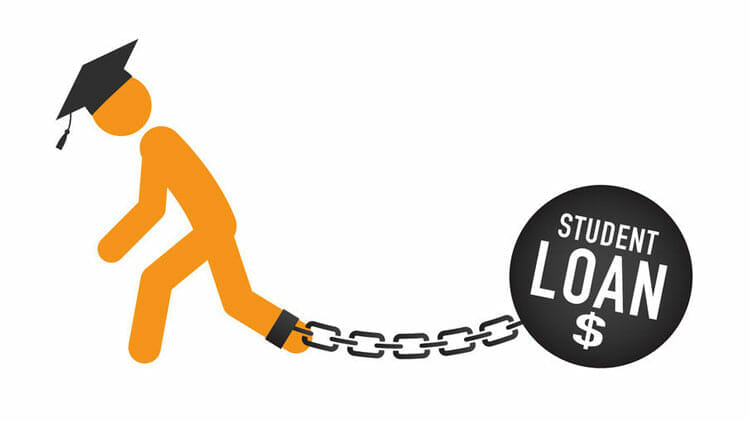
By age 30, college grads with student loans have half as much saved for retirement as those with no loans, according to research from Boston College. It’s important not to sacrifice retirement goals at the expense of paying down student debt. But to do so, you need to step back and look at the big picture.
Delaying saving for retirement can have disastrous consequences. First, there’s an opportunity cost for sitting on the sidelines — and young people have the most to lose due to the longer investment horizon their age allows for. Second, not participating in a company-sponsored 401(k) plan and taking maximum advantage of any company match is “leaving money on the table.” You want to save for your future, but you also want to get that monkey off your back, so what are you supposed to do?
You probably have to find a way to do both.
But that doesn’t necessarily mean eating rice and beans until your third decade of life. With a broad view and a sensible plan, you can pare down your debt and build your nest egg too.
Max the match. In the short term, you’ll probably want to contribute to your employer-sponsored 401(k) up to the point of receiving the maximum allowable company match. Don’t turn away free money.
Talk to an expert. When it comes to something this important, seek out the advice of an expert, not some YouTube guru or your college roommate. Come to the meeting prepared with your current income, budget, all debts (including credit cards and car payments) and a positive attitude — you can do this!
Compare rates. When deciding what to prioritize, look at the interest rates of all your debts. You’ll need to evaluate this against potential after-tax returns from investing. Try to get those higher interest loans off your plate earlier, because they’re the ones that will end up costing you more over the long haul. Investing does come with risk, but so does not investing. And the savings from paying down debt is a sure thing. If your student loan rates are particularly high, and higher than the gains you’re likely to realize in the stock market, then it may make more sense to prioritize paying those down.
Consider your taxes. This is an area where it can really pay to have an expert run the numbers for you. Investments in retirement savings, whether through a 401(k) plan or an IRA, offer special tax advantages that should be kept in mind. Benefits include being able to fund the account with pre-tax dollars as in a traditional 401(k), or tax-free income during retirement with Roth plans. If your income is low enough, you may be eligible for a saver’s credit on your retirement contributions. And depending on your income, you could qualify for tax deductions on the interest you pay on student loan debt.
Look at refinancing. You may be able to lower your interest rates by refinancing your student debt. And this can potentially make a lot of sense. But also consider that federal student loans allow you to take advantage of income-driven repayment plans and can offer forbearance or even forgiveness options not available elsewhere. Make sure you’ll be able to make your payments if you decide to refi. Moreover, credit score and loan balance requirements may apply, which might put this option out of reach for some borrowers.
Start now. The most important thing is to have a plan and start executing it. It’s okay if the plan changes over time — that’s why you should review your retirement and debt repayment strategy annually or whenever there’s a significant change in your financial situation. The one thing you don’t want to do is avoid dealing with your student loans, because you won’t be able to forever. And tackling them head-on now will give you the most options and the best chance for a bright financial future.
Sources:
https://www.cnbc.com/2018/09/17/how-to-pay-down-your-student-loans-without-sacrificing-your-retirement-wealth.html
http://crr.bc.edu/wp-content/uploads/2018/06/IB_18-13.pdf