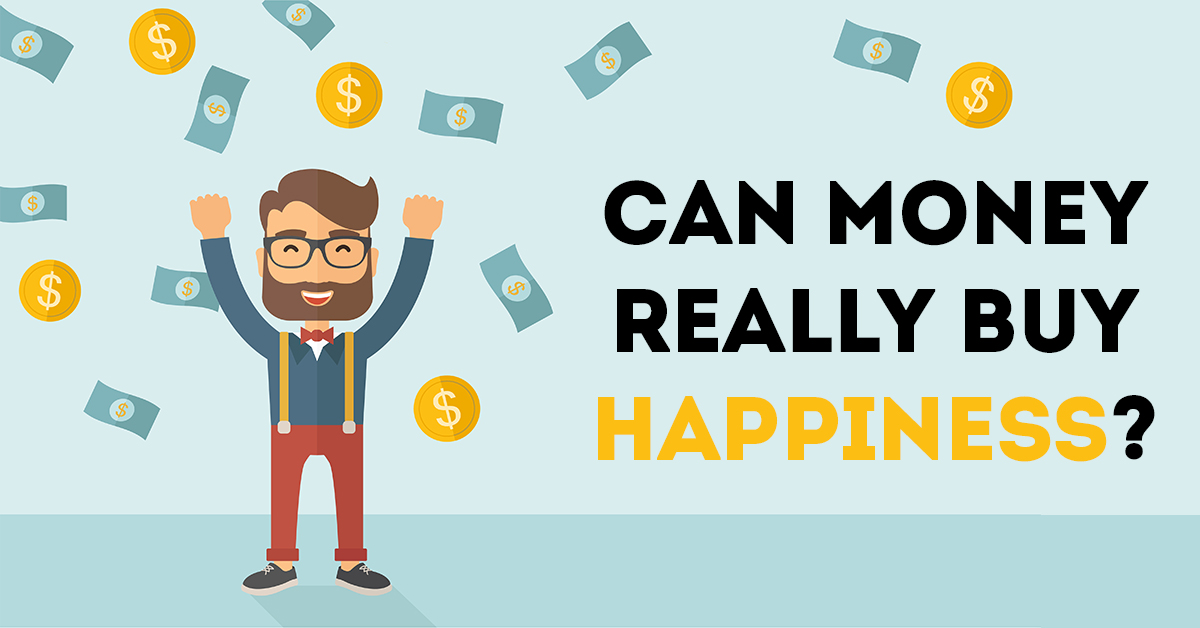
It’s an age-old question: Can money buy happiness? The answer, it seems, is not straightforward.
Research indicates that higher salaries are associated with greater levels of happiness. Gross domestic product (GDP) per capita, a measure of nationwide living standards, has often been regarded as a reflection of population-level happiness. Plus, the reward center in the brain that responds to food and recreational drugs is also activated by monetary rewards.
OK, so money makes us happier, right? Well, not so fast …
There are a number of caveats to such findings. For example, while higher salaries are, in fact, associated with greater levels of happiness, there appears to be a clear point of diminishing returns. Specifically, once the threshold of $75,000 is reached, there’s a precipitous drop off of any happiness benefit in terms of additional annual income.
Also, it’s important to remember that correlation does not imply causation — just because two things are related doesn’t mean that one causes the other. So, while increased GDP tends to go hand in hand with increased happiness, other factors could underlie the reason why. For example, perhaps it’s the greater economic and educational opportunities or personal freedoms available in high GDP-per-capita countries that actually make the people who live in them happier.
Finally, it’s important to distinguish between pleasure and happiness. Many things we experience as pleasurable may not contribute to long-term happiness — things like a good meal, a designer outfit or a new smartphone. In fact, some things that are pleasurable in the short term can lead to exactly the opposite over time, such as cigarette smoking or eating too many treats.
However, there are some ways you can use money to create more lasting satisfaction in your life, both now and during retirement. Here are three:
1. Give to others. You may be more likely to create happiness for yourself when you use your money for someone else’s benefit. One study found that people who bought coffee for someone else were happier than those who purchased a cup for themselves.
2. Focus on experiences, not things. When you buy an experience, especially one that you can share with someone you care about, you have the benefit of looking forward to that experience, enjoying the event itself, and then relishing and sharing the memories afterward.
3. Pay to free up your time. You’ll also tend to derive a happiness benefit from using money to buy your way out of doing what you don’t enjoy. This might mean hiring someone to clean the house, weed the yard or do the laundry. Then use the time you free up to do something you really like instead.
And of course, retirement can present a great opportunity to do a lot more of the things you love. But if you can’t afford basic expenses or the medicine you need to stay active and healthy, your enjoyment can be limited.
So if you want to spend your golden years doing what you love with the ones you love — whether that’s traveling, visiting family or indulging a passion for gardening or golf — give yourself the best chance possible by preparing for a secure financial future. Your NFP financial advisor is available to help you plan your happy retirement.
Sources:
https://www.cnbc.com/2017/07/25/3-ways-money-can-buy-you-happiness.html
https://blogs.scientificamerican.com/streams-of-consciousness/can-money-buy-self-esteem/
http://content.time.com/time/magazine/article/0,9171,2019628,00.html
http://www.forbesindia.com/article/briefing/the-correlation-between-money-and-happiness/35847/1